
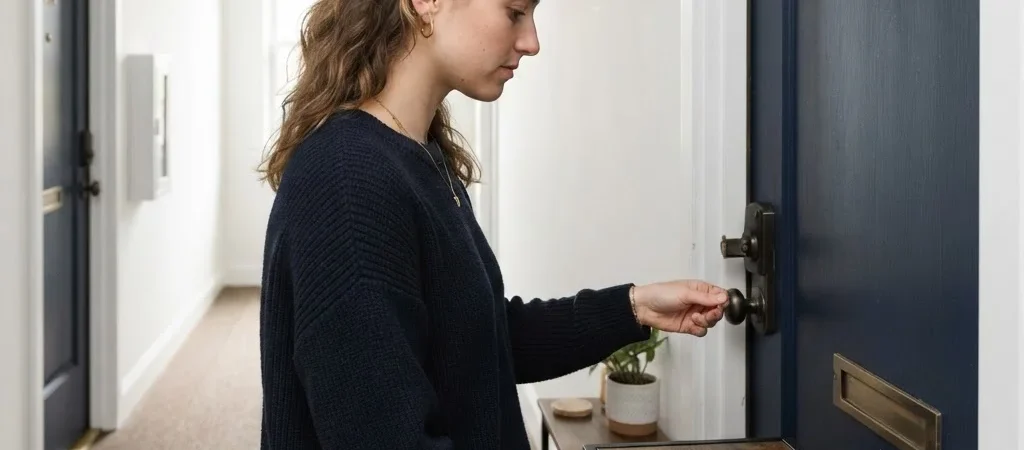
The best time to notice a loose strike plate or a window that never quite latches is before you need that entry point to work. Start with the doors and windows you use every day, then move around your apartment at a comfortable pace. The goal is a clear list of things you can address yourself and anything to raise with your property manager.
Start at the Main Door
With the door closed, check that the latch catches without lifting or pushing the door hard. Look for visible gaps, loose hardware, or a deadbolt that turns smoothly from inside. If the lock sticks, feels unstable, or does not line up, note what happens rather than taking the lock apart.
Check the peephole or other way you identify a visitor before opening the door. If your building has an intercom, test whether you can hear and respond from inside. Keep shared-hallway doors closed behind you, and avoid propping open a building entrance for convenience.
Check Windows and Shared Spaces
Open and close each window you rely on, then test its latch gently. Pay extra attention to ground-floor windows, balcony doors, and windows next to a fire escape or shared walkway. Make a note of a latch that will not engage, a screen that is mistaken for a lock, or an obstruction that keeps the window from closing.
In an apartment building, the route to your unit matters too. Notice whether the entry door closes behind you, whether exterior lighting is working, and whether hallways and exits remain clear. These shared areas are usually outside a renter’s control, so send specific observations to the property manager instead of trying to modify building hardware.
Keep Changes Lease-Friendly
Before adding a door device, camera, window pin, or other hardware, check your lease and ask the property manager what is allowed. A solution that works in one rental may leave holes, affect a fire exit, or interfere with a building system in another. Do not block an exit or alter a lock without permission.
Turn your notes into a short follow-up list: what you checked, what did not work as expected, and whom you contacted. A dated photo can help explain a maintenance issue, but avoid sharing images of keys, access codes, or other private details. Keep the list somewhere easy to revisit after repairs.